Useful essential oils
Back when I had a nine or so month bout with urticaria (hives), I tried all sorts of things to soothe the itching, to prevent infection, and to speed up healing the skin. One of the rabbit holes I fell into was aromatherapy.
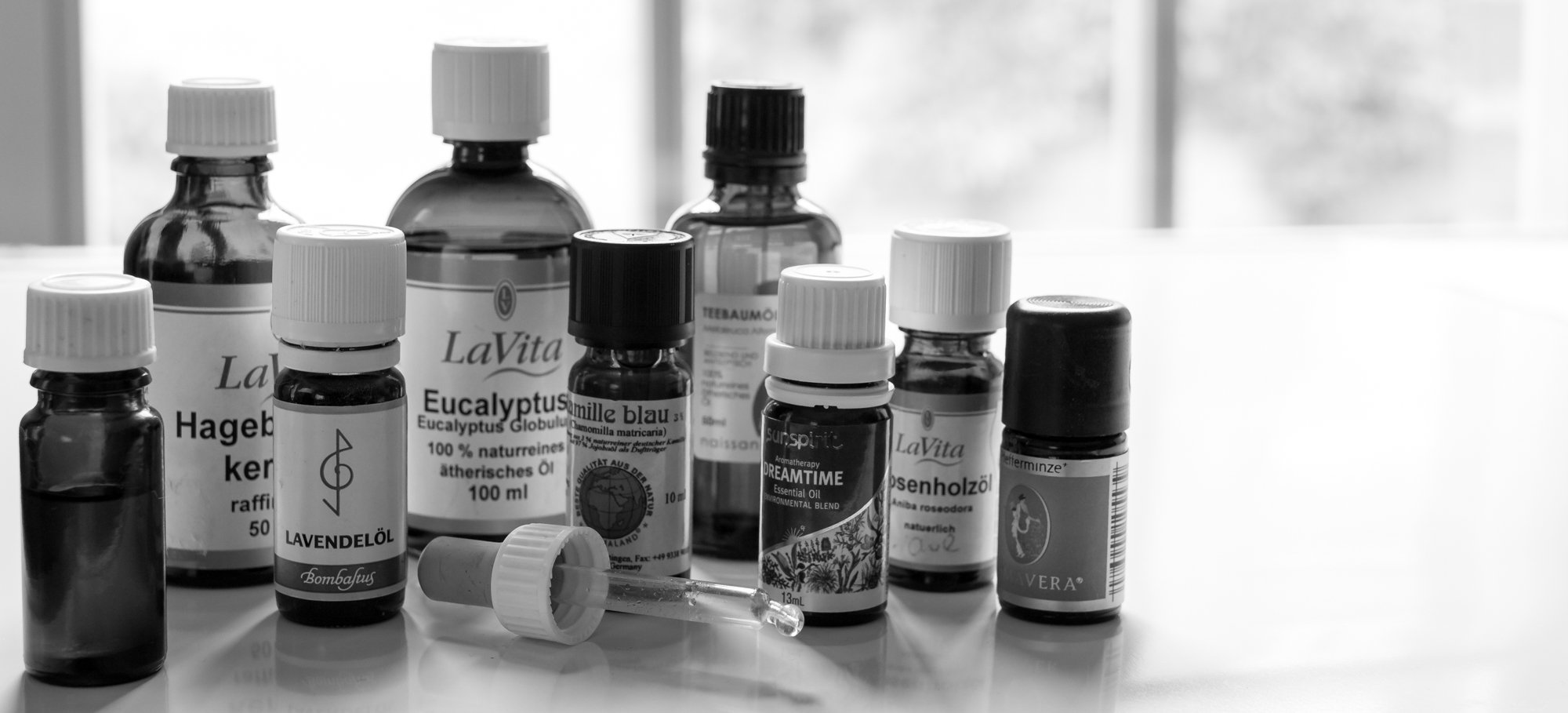
I’ve since used a combination of oils for psoriasis itchy welts, shingles, acne, grazes, boils, and to lessen the after effects of dermatillomania (skin picking). I’ll occasionally use them to help reduce the headaches from sinusitis, to warm up muscles during a massage, and to make me feel better on a down day.
Aromatherapy research
The medical research is mixed, although there have been quite a number of studies - search for essential oils on PubMed to see a huge collection of both good and bad publications (1).
There are definitely compounds in some oils that are useful in isolated testing in laboratories - tea tree, geranium, clary sage and eucalyptus oils do contain antibacterial / antimicrobial properties (2, 3, 4, 5). Tea tree has been shown to be anti-fungal (6) , decrease the rash from an allergic (histamine) response (7), and decrease the inflammation of gingivitis (8).
Aromatherapy and essential oils are often used for relaxation and to help with mild sleep disorders (9). Rosemary oil has been found to increase physical activity (reduce tiredness) in mice (10). Sniffing both lavender and rosemary oils decrease cortisol (a stress hormone) in people (11).
People can respond badly to essential oils, with many causing dermatitis, especially lavender, tea tree, peppermint and ylang-ylang (12). These are all the oils I use regularly!
Important - Please do a test patch to see how you respond to the essential oils before treating or massaging any large area.
Also note, it’s best to dilute the oils in a carrier oil.
Oils for sinus problems and headaches
My go-to headache oils are peppermint and eucalyptus. Peppermint massaged around the temples and above the eyes helps to open up the sinuses and make it easier to breathe. Eucalyptus oil on a cloth works similarly, or in a warm vaporizer, especially at night.
Occasionally I’ll add tea tree because I was diagnosed as having chronic sinusitis from a fungal allergy. A cotton tip with the tiniest amount of tea tree oil, dipped into a salt water solution to use in a neti pot does seem to help.
Alternatively, I’ll steam my head with a combination of tea tree, peppermint and eucalyptus. I usually add lavender oil because I hate the smell of tea tree!
Skin healing oil for acne, boils and fungal infections
On large pimples, cysts and boils, I tend to use tea tree neat (not diluted). I’ve tested this on my skin and I don’t react badly, but many people do. It dries the skin out and the antibacterial properties prevent further infection.
For a less drastic treatment, a combination of essential oils in a rosehip base oil is good - tea tree, lavender, geranium, chamomile, rosewood (for scent).
If my skin is cracked and dry skin, calendula base oil is more moisturizing and also helps broken skin heal.
Mixing this ‘healing’ oil into some hand cream helps heal the sides of my nails - it’s a little too oily when used without the hand cream.
Once my the laparoscopy cuts had healed over, I used this essential oil mixture after hysterectomy to help the cuts on my belly recover more quickly and scar less. My poor belly button has been cut into six times now, so it needed a bit more love and care. And still does.
Update 2026: Sometimes, I’ll smoosh it into an anti-fungal cream for extra effect against tinea or thrush. Being on immune suppressant medications means I battle these and a staph infection around my nose constantly. Also, belly button has now been cut into 7 times for laparoscopies and then cleaned up and repositioned once by the plastic surgeons when my belly was used for the DIEP breast cancer transplant. Poor long-suffering belly button!
Anti-itch oil, cooling spray and bath
If I’m itching without any visible cause or on the occasional psoriasis plaques, I use the acne skin oil. The anti-fungal and anti-inflammatory tea tree oil seems to help.
When I had hives over my whole body, I got more creative. I included a number of scents that I loved as well, because being permanently covered in red, bumpy, itchy welts is very emotionally upsetting.
For a moisturizing and soothing oil, applied several times a day I followed this recipe:
- 40ml grapeseed oil (base + preserving properties)
- 40 ml almond oil (base)
- 30 ml rosehip oil (base + moisturizing properties - especially good for dry skin)
- 30 ml wheatgerm oil (base)
- 10 ml calendula oil (skin inflammation + healing of abrasions)
- 8 ml 3% chamomile in jojoba (the best oil for skin inflammation, itchiness)
- 20 drops 3% rose in jojoba (scent)
- 10 drops lavender (antiseptic)
- 5 drops bergamot (for aggravated skin)
- 5 drops jasmine (scent)
- 5 drops tea tree (anti-inflammatory, smells disgusting)
- 5 drops neroli (scent)
- 5 drops geranium (antiseptic)
- 3 drops patchouli (scent)
- 3 drops juniper (scent)
This made quite a lot - I used it all the time, over my whole body.
I also used a cooling spray with some essential oils for when the itching was too severe:
- 75ml distilled water
- 25ml liquid aloe (moisturizing, cooling)
- 10 drops 3% chamomile in jojoba (anti-inflammatory)
- 2 drops 3% rose in jojoba (scent)
- 2 drops lavender (antibacterial and scent)</p>
I kept the spray bottle in the fridge - it’s lovely in summer.
I also took cool baths using a cotton bath bag filled with:
- oatmeal or oats
- 8 drops calendula
- 6 drops 3% chamomile
- 4 drops bergamot
- 4 drops lavender
- 2 drops 3% rose
- 1 drop patchouli.
I let this sit in the bath as it was filling up, massaged it as I was soaking, and then used it like a soap.
Oat ‘milk’ is surprisingly soothing to itchy skin!
These days, I’m more likely to drip lavender, chamomile and calendula oils into a warm Epsom salts bath for cramped legs.
Massage oils for fibromyalgia (spondyloarthritis)
My muscles, or rather the edges of my muscles and my ‘tendons’ always hurt. I’ve found massage to be the best way to combat this. Although it’s the massage that helps the most, including my favorite scents helps the psychological aspects of chronic pain.
A mixture of black pepper (warming), wintergreen or camphor (warming), geranium (scent), lavender (scent), rose (scent), ylang ylang (scent).
I’ve recently found an arnica massage oil base, fabulous for getting rid of bruises faster and also seems to warm the muscles.
I used Weleda’s mild lavender massage oil and the arnica massage oil (which is fragranced with lavender) once the DIEP breast transplant had healed completely - it needed weekly lymph drainage while it softened over the next 3 years. Both moisturising, and a balm against the chronic pain.
Home and garden
A few drops of tea tree in floor cleaning water or on a cloth used for cleaning the kitchen can keep the bacterial and fungal load lower. I use a spray bottle with white vinegar and tea tree as a surface cleaner.
But do keep your cats and other pets away from it until it has completely dried. Terpenes in higher concentrations, such as in undiluted tea tree oil, are toxic (13).
Some drops of my favorite scent, lavender, in the rinse water when washing clothes, or mixed in distilled water and sprayed over clothes always makes me smile. You could put a few drops in with the clothes in a dryer, if you use one.
Neat eucalyptus oil is a fabulous label remover. It also helps remove the residue from plasters stuck to your skin - wash thoroughly with soap afterwards though, as it can be quite irritating on the skin.
Neem is a decent pest repellent in the garden and around the home. Keep neem well away from children and pets though!
- Make an insecticide with a little potassium soap and a lot of water and spray it onto aphid or scale infested plants (when the sun isn’t too strong).
- Make a moth repellent with ethanol to spray on tapestries or rugs.
Aromatherapy uses
Occasionally, I’ll use the oils ‘traditionally’, in an oil burner.
These are my standard blends.
- Relaxation - sandalwood, rosewood, lavender, ylang ylang
- Sleep - chamomile, lavender, majoram
- Wake-up / concentration - orange, lemon, rosemary, basil, ginger
A-Z of oils
| Common name | Scientific name | Use for | Avoid |
|---|---|---|---|
| Basil | Ocimum basilicum | concentration, depression, headaches | children, pregnancy |
| Bergamot | Citrus bergamia | stress, acne, cold sores | may cause skin sensitivity to sunlight |
| Black Pepper | Piper nigrum | muscle aches, bruising | may irritate sensitive skin |
| Cedarwood | Cedus atlantica | coughs, acne | pregnancy |
| Chammomile | teething, tension | 3% oils are not suitable for vaporisation | |
| Chammomile Blue | dermatitis, eczema, tension, stress, insomnia, migraine, headache |
not suitable for vaporisation, low blood pressure |
|
| Citronella | Cymbopogon winterianus | insect repellant | sensitive skin |
| Clove | Syzygium aromaticum | toothache, in toothpaste | keep away from eyes |
| Eucalyptus | Eucalyptus polybractea | colds, flu, fever, cough, cleaning | do not ingest |
| Fennel | Foeniculum vulgare | indigestion, fluid retention | pregnancy |
| Frankincense | Boswellia carteri | dry skin, inflamed skin | |
| Jasmine | childbirth, stress | 3% oils are not suitable for vaporisation, low blood pressure | |
| Lavender | Lavendula augustifolia | stress, cuts, burns, headaches, migraines, insomnia, eczema, antiseptic |
|
| Lemon | Citrus limon | stress, depression, colds | may cause skin sensitivity to sunlight |
| Marjoram | Origanum marjorama | insomnia, muscle aches | pregnancy |
| Melissa | migraines, stress, headaches, eczema, hives |
not suitable for vaporisation, low blood pressure |
|
| Neem | _ _ | garden pests | do not apply to skin or ingest, keep away from pets |
| Neroli | insomnia, premenstrual symptoms | not suitable for vaporisation, low blood pressure |
|
| Orange | Citrus aurantium | eczema, stress | may cause skin sensitivity to sunlight |
| Patchouli | Pogostemon cablin | tinea, damaged skin | children |
| Peppermint | Mentha x piperita | indigestion, nausea, colds, flu | pregnancy |
| Petitgrain | Petitgrain bigarde | insomnia, acne | |
| Rose | dry skin, premenstrual symptoms, stress |
not suitable for vaporisation, low blood pressure |
|
| Rosemary | Rosmarinus officinalis | dandruff, headaches, concentration | Epilepsy, high blood pressure, do not take internally |
| Rosewood | Aniba rosaeodora | nausea, stress, acne, dermatities | |
| Sandalwood | Sandalum album | sensitive skin, cystitis | |
| Tea tree | Melaleuca alternifolia | cleaning, cuts, congestion, an antiseptic and antibacterial |
do not ingest |
| Ylang Ylang | Cananga odorata | stress, tension |
Selected commercial essential oil blends
| Commercial blend | Oils in blend |
|---|---|
| Meditation Oil | Oakmoss, Bergamot, Ylang Ylang, Benzoin, Ban, Patchouli, Cedarwood, Tolu, Lavender, Nutmeg, Orange, Frankincense |
| Sanctuary - Recovery | Lemon, Juniperberry, Fennel, Ginger |
| Sanctuary - Winter Blues | Lemon, Cypress, Eucalyptus, Juniper, Thyme |
Carrier and blending oils
| Base Oil | Useful for |
|---|---|
| Almond oil or Sweet almond oil | irritated skin, earache, hair conditioning |
| Apricot kernal oil | skin problems, eczma, hives |
| Arnica oil | bruises, sprains |
| Avocado oil | dry skin |
| Calendula oil | cuts, irritated skin |
| Evening primrose oil | eczma, premenstrual symptoms |
| Grapeseed Oil | oily skin |
| Hypericum oil | haemorrhoids, bruises |
| Jojoba oil | eczma, dermatities, hives, hair conditioning |
| Macadamia oil | irritated skin |
| Pumpkin seed oil | water retention |
| Rosehip oil | old or dry skin, eczma |
| Wheatgerm oil | irritated skin |
Other blending suggestions
| Product | Useful for |
|---|---|
| Bicarbonate soda | cleaning, deodorising |
| Calcium carbonate powder | toothpaste with glycerin |
| Epsom Salts | bath salts, sore muscles |
| Ethanol | mix with a few drios if neem for a clothing moth repellant |
| Glycerine | toothpaste with calcium carbonate, bath salts for moisture |
| Rock salt or Sea salt | bath salts, exfoliation |
| Rosewater | skin mist, moisturising |
| Solubliser | dispersing oil in water |
| Witchhazel | astringent,toner, exczma |